Brown Hair Aix-en-Provence Escort: Real Interviews With Local Ladies
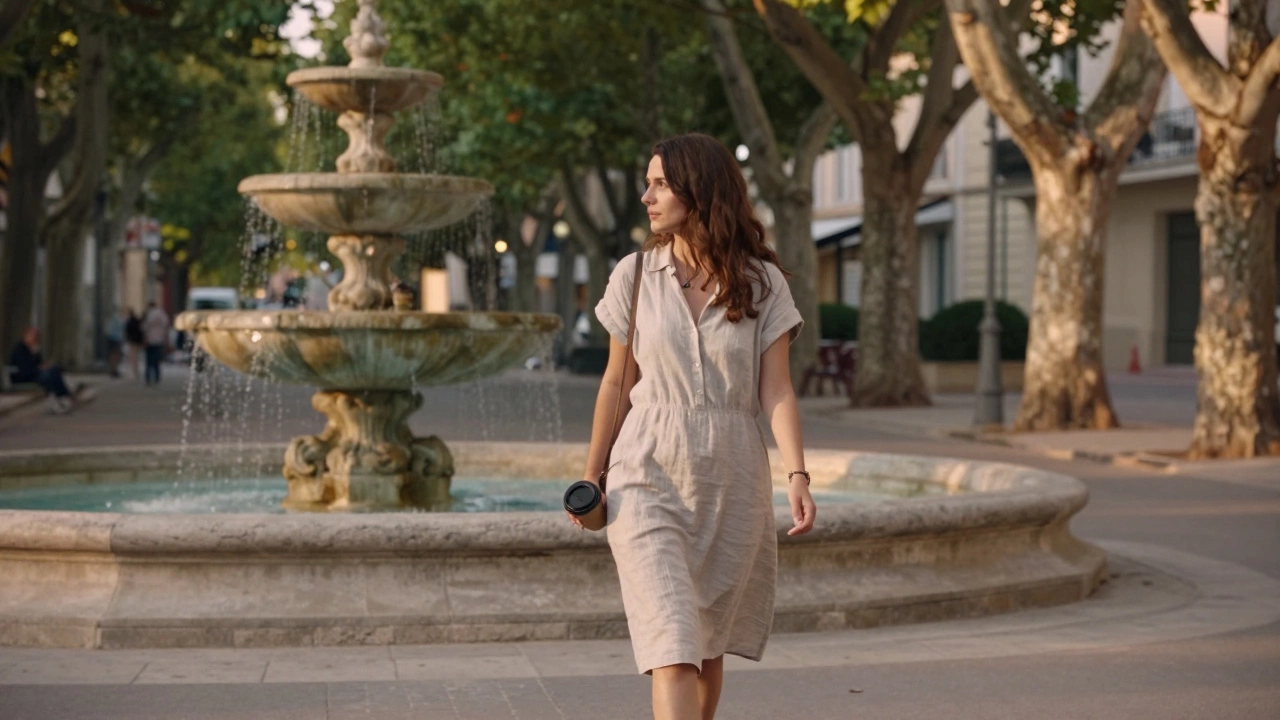
When people think of Aix-en-Provence, they picture sunlit squares, lavender fields, and quiet courtyards where artists still sketch in the shade of plane trees. But behind the postcard charm, there’s another side - one that doesn’t show up in travel guides. Some women in Aix-en-Provence offer companionship services, often as a way to support themselves while staying close to home. These aren’t stereotypes. They’re real people - mothers, students, artists - with stories that don’t fit the usual narrative.
One woman I spoke with, Marie, 34, has brown hair she lets grow past her shoulders. She used to work in a local boutique before the pandemic hit. When sales dropped and her hours were cut, she started offering companionship through a discreet network. She doesn’t advertise online. No flashy photos. No staged videos. Just word of mouth. She says, "I’m not selling sex. I’m selling presence. Someone to talk to, to walk with, to share a meal with. If that leads somewhere else, that’s their choice, not mine." She’s not alone. There are dozens like her in the region, many of whom prefer to stay local rather than move to Paris. For those looking for similar services in the capital, you can find more context at escort girl paris.
It’s easy to assume that women in this line of work are from somewhere else - foreign, desperate, or trapped. But in Aix-en-Provence, most are French, born and raised. Many have degrees. Some studied literature. Others trained as dancers or photographers. They don’t see themselves as "escorts" in the way the media portrays it. They’re private individuals who set their own rules: no drugs, no alcohol during meetings, no public locations, no repeat clients unless they agree to it.
What Actually Happens During a Meeting?
The sessions aren’t what you’d expect from movies or sensational headlines. Most last between two and four hours. They usually start with coffee or a walk along the Cours Mirabeau. Some clients want to discuss books. Others just want to hear someone laugh. A few ask for advice on relationships or career moves. Physical intimacy, when it happens, is always mutual and never expected. One woman told me she once spent an entire afternoon helping a client write a letter to his estranged daughter. He cried. She didn’t charge him extra.
There’s no standard pricing. Some charge €80 for a two-hour meeting. Others ask €150 for a full evening. Payment is usually cash, handed over quietly at the end. No receipts. No apps. No reviews. This isn’t Uber for companionship. It’s personal. It’s quiet. It’s built on trust.
Why Aix-en-Provence? Why Not Paris?
Paris has more visibility. More demand. More risk. But Aix offers something different: anonymity. The city has 140,000 residents, but only a few hundred know who’s doing what. The police don’t target these women unless there’s a complaint - and most clients don’t file them. There’s also less pressure to perform. In Paris, women often feel like they’re on a stage. In Aix, they’re just neighbors.
That’s not to say it’s easy. The stigma is real. One woman lost her job at a yoga studio after a client’s ex-partner recognized her in a photo. Another was disowned by her family after a local newspaper ran a misleading story. But many still choose this path because it gives them control - over their time, their boundaries, their income. And in a place where rent is rising and wages aren’t, that control matters.
The Reality Behind the Keywords
You might have searched for "sexe escort paris" or "escort paris 2" looking for something specific. But what you won’t find in those searches are the quiet truths. The woman who reads poetry to her clients. The one who brings her own wine to meetings. The one who doesn’t take calls after 9 p.m. because she’s helping her niece with homework. These aren’t part of the algorithm. They’re not optimized for clicks. But they’re real.
Even the language we use shapes the perception. "Escort" sounds transactional. "Companion" feels warmer. "Sex worker" is clinical. None of them fully capture the complexity. Most of these women don’t label themselves. They just live their lives - quietly, carefully, and on their own terms.

How Do They Stay Safe?
Safety isn’t an afterthought. It’s built into every decision. Most use encrypted messaging apps like Signal or Threema. They never share their home address. Meetings happen in hotels, rented apartments, or quiet cafés with private booths. They check IDs. They tell a friend where they’re going. Some carry panic buttons. One woman keeps a fake phone call on speed dial - if she feels off, she presses it and says, "I’m running late, can we reschedule?" - and her friend calls back immediately.
There’s also a small, unspoken network. Women in Aix know each other. If someone’s acting strange, they warn the others. If a client crosses a line, they share the name. It’s not a database. It’s a circle of trust.
What Do Clients Really Want?
It’s not just about physical attraction. Many clients are men over 50 - divorced, lonely, or grieving. Some are young professionals overwhelmed by work. Others are travelers who feel isolated in a foreign city. One man, a retired professor, came every two weeks for six months just to talk about French poetry. He never touched her. He said, "You’re the only person here who listens without trying to fix me."
There’s a myth that these services are only for the wealthy. That’s not true. Clients come from all walks of life. Teachers. Mechanics. Retirees. Students. The common thread? A need for connection that society doesn’t make space for.

Is This Legal?
In France, selling sex isn’t illegal. Buying it is. That’s the law. So women can offer companionship without breaking the law - as long as they don’t explicitly negotiate sex in advance. It’s a gray zone, and it’s enforced unevenly. In Aix, police rarely intervene unless there’s a public disturbance or a complaint. Most of these women operate under the radar, and most clients respect that.
But the legal system doesn’t protect them. If a client refuses to pay, there’s no recourse. If they’re harassed, reporting it can lead to more trouble than relief. That’s why most avoid the system entirely.
What Happens When They Want to Leave?
Some stay for years. Others leave after a few months. One woman I met, Sophie, 29, worked for a year after her divorce. She saved enough to go back to school. Now she’s studying social work. She says, "I didn’t want to be a victim. I didn’t want to be a hero. I just wanted to survive. And I did." She still keeps in touch with a few clients - as friends.
Leaving isn’t easy. The stigma doesn’t disappear overnight. Some lose jobs. Others can’t find housing. A few turn to NGOs for help. There are a handful of local organizations in Aix that offer legal advice, therapy, and job training - but they’re underfunded and hard to find.
Why This Matters
This isn’t about glamour. It’s not about fantasy. It’s about the people who fall through the cracks of a system that doesn’t offer enough support - especially for women in small cities. These women aren’t asking for pity. They’re asking to be seen as human beings with choices.
And maybe that’s the real story here. Not the sex. Not the money. But the quiet courage it takes to live on your own terms - in a world that rarely gives you the space to do it.
There’s a reason these women don’t talk to the press. They’ve learned that attention brings danger. But if you listen - really listen - you’ll hear something deeper than the keywords you searched for. You’ll hear voices that don’t fit the script. And that’s worth more than any search result.